
Solving a Global Challenge Takes a Global Team
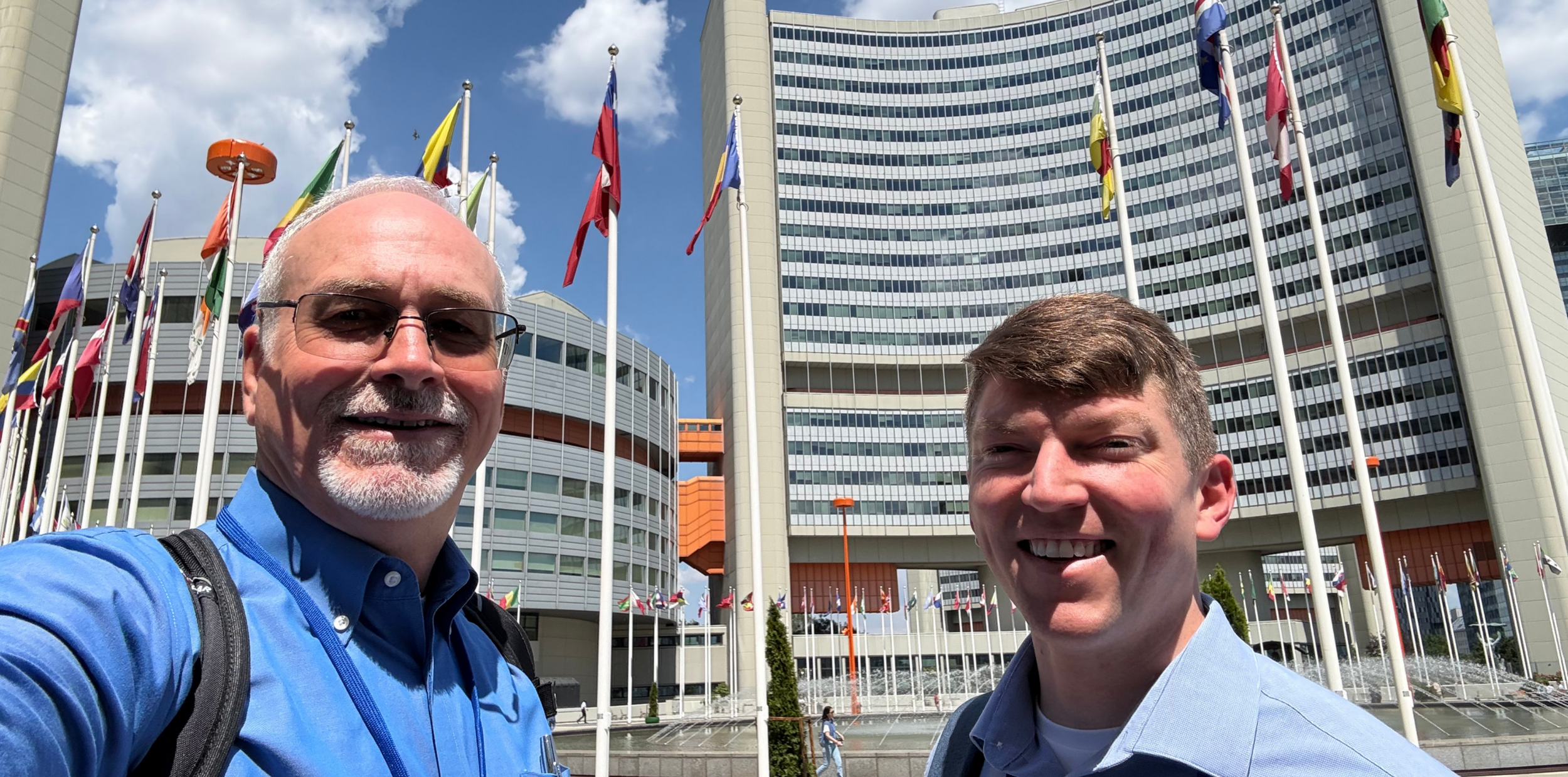
(Pictured are Andy Griffith, Executive Director of the Deep Borehole Demonstration Center and Deep Isolation Director of Engineering Matt Waples at the IAEA Coordinated Research Project Workshop in Vienna, July 2026)
I've been to enough international meetings over the years to know that no two countries look at spent nuclear fuel (SNF) management the same way. Every nation has its own geology, policies, and priorities. While some countries are only beginning to look at deep borehole disposal, others have spent years studying it.
What struck me at the recent International Atomic Energy Agency (IAEA) Coordinated Research Project on Deep Borehole Disposal Options Value Proposition workshop in Vienna was that a lot of countries are asking the same questions:
“Where could deep borehole disposal fit within a national disposal strategy?”
“What do we still need to learn?”
“How do countries obtain the information they need to decide whether it is an option worth pursuing?”
Participants discussed the value proposition for deep borehole disposal, compared it with other disposal approaches and identified areas where additional technical work would be valuable. Despite differing perspectives, participants shared a common objective: ensuring the safe, long-term management of SNF.
We are currently seeing that same conversation gain momentum here in the United States.
The Department of Energy's Nuclear Lifecycle Innovation Campus initiative released earlier this year recognizes that advancing nuclear energy means looking at the entire fuel cycle. This means not only building new reactors but also the technologies needed to safely manage and ultimately dispose of SNF.
That's one reason the work underway at the Deep Borehole Demonstration Center is so important.
Earlier this year, we launched the first full-scale, at depth, nonradioactive demonstration program for deep borehole disposal near Cameron, Texas. The purpose is to answer important technical and operational questions through a full-scale demonstration. Demonstrations give researchers, regulators and policymakers something they can't get from reports and analysis alone. They provide operational experience, data and lessons learned that can be shared across the broader waste management community. International stakeholder research conducted before the Deep Borehole Demonstration Center was launched found that demonstration was viewed as the most important next step for advancing deep borehole disposal, and four out of five participants said they wanted greater international collaboration on the technology.
Solving the nuclear waste challenge will take global conversations and global collaboration. I'm encouraged to see the conversation around deep borehole disposal becoming more focused on technical evaluation and real-world experience. That is the role the Deep Borehole Demonstration Center was created to serve, and I look forward to collaborating with partners and sharing what we learn.
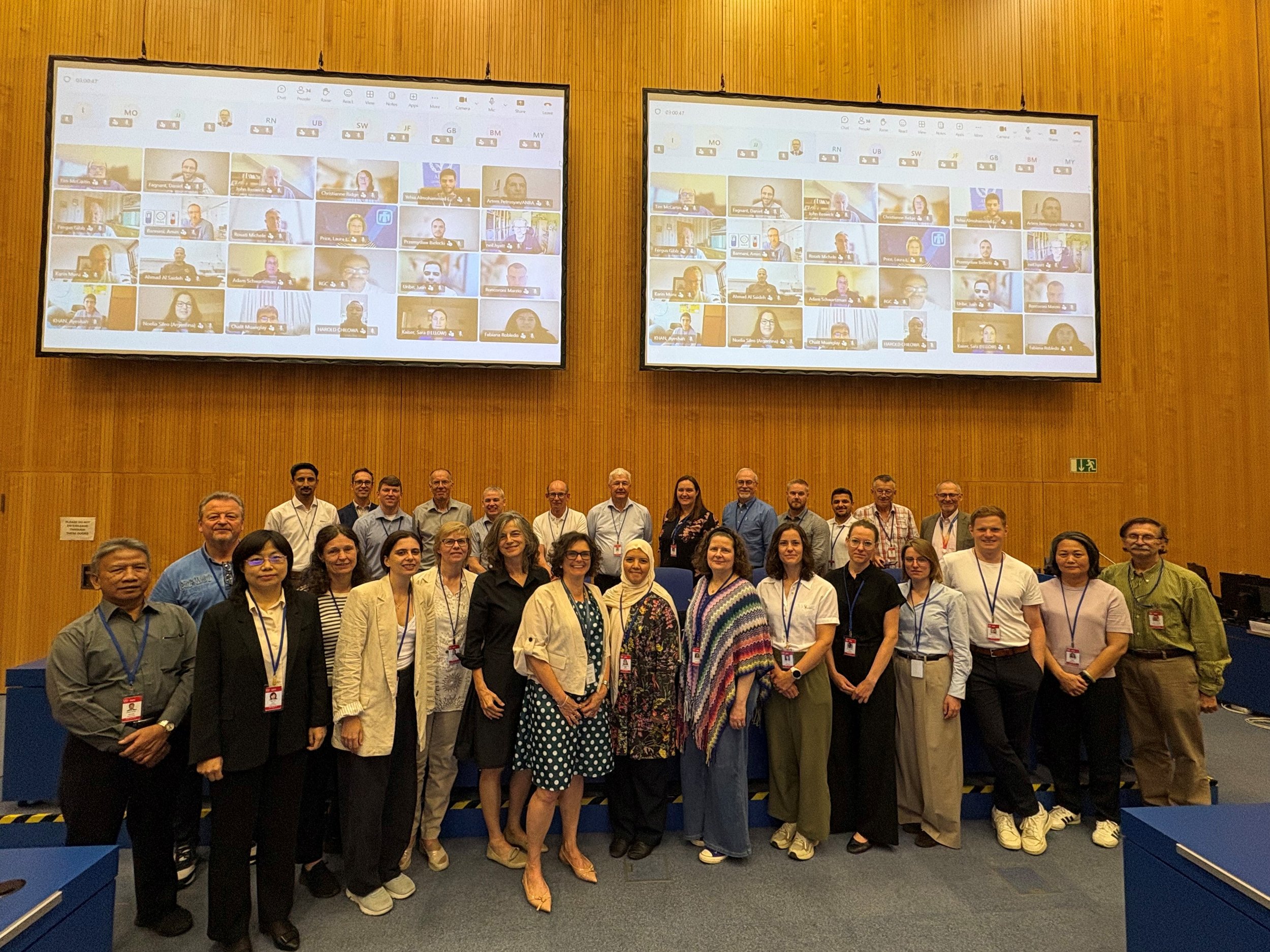
(Group photo from IAEA DBD CRP Value Proposition Workshop)